Built to make worlds possible.
The tools are part of the work. These documented workspaces explore runtime systems, 3D assets and raster/vector production. They are not advertised as finished or commercially released software.
Technical descriptions originate in the actual project development documentation. Concept illustrations are not screenshots of completed software, and these projects are not available for purchase here.
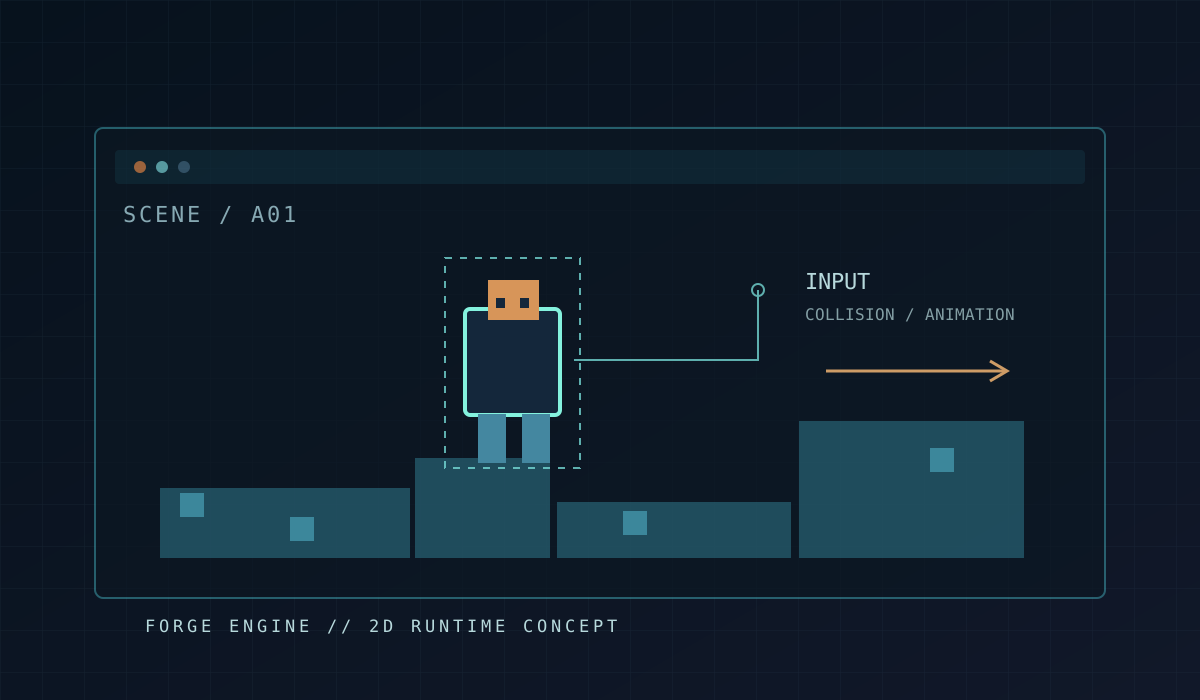
Forge Engine
Build the rules. Then build the world.
A game engine is where an idea becomes a set of consistent rules. Forge Engine explores a small native runtime: scenes and resources, input and collision, animation and persistence. The goal is to make those systems predictable enough that the experience can take center stage.
- C++20 runtime with SDL3 graphics, sprites, input and gamepad handling
- JSON-driven projects, scenes and tile maps
- Entity movement, AABB collision and sprite-sheet animation
- Save slots, WAV effects and build/package command-line tools
This is a 2D-first development workspace, not a shipped game or a general-purpose commercial engine. 3D rendering, a visual scene editor and advanced physics are not part of the documented v0.2 runtime.
Explore this development workspace →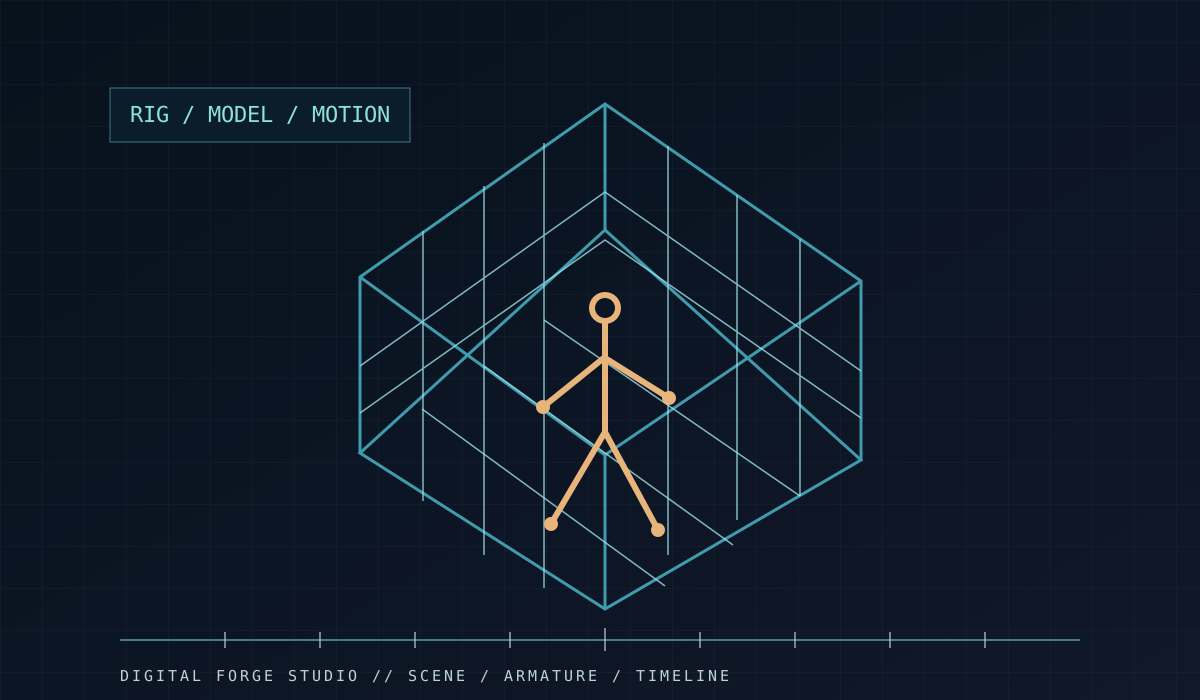
Digital Forge Studio
Give a world something to move with.
Making assets is part of making games. Digital Forge Studio explores the bridge between shapes, editable scenes, armatures, animation and portable interchange. Keeping the scene data independent of the renderer means the content can travel farther than any single viewport.
- Mesh editing, selection tools and non-destructive modifier stacks
- Armatures, skin weights, inverse kinematics and keyframe animation
- Materials, cameras, lights and a persistent scene hierarchy
- STL, OBJ, glTF and GLB import/export workflows
The editor is under development. This page describes implemented tooling from its repository, not a completed commercial 3D suite or publicly released game.
Explore this development workspace →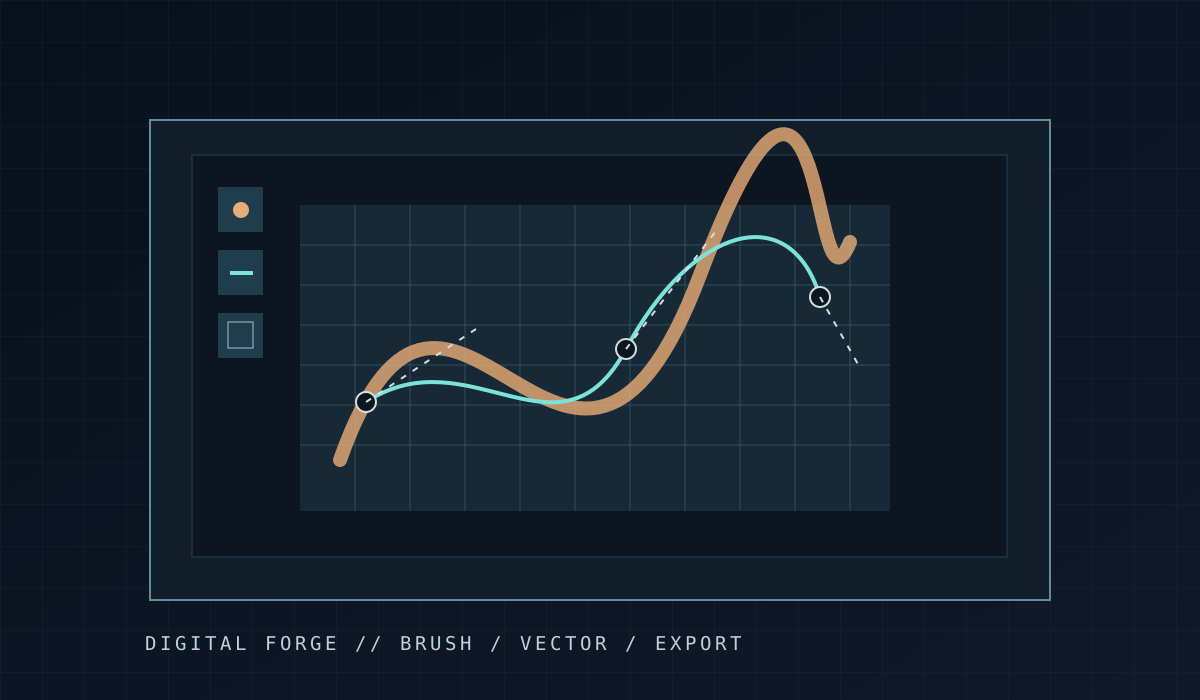
Digital Forge
Art is part of how a world communicates.
Games need more than textures: their menus, symbols, maps and interfaces tell players what matters. Digital Forge explores control of the entire image-making pipeline, from hand-drawn marks and vectors to layers, masks and production-ready exports.
- Vector paths, artboards, raster brushes and editable layers
- Textured brush tips, masks, gradients and tone controls
- Undo/redo history and local project recovery
- PNG, SVG, PDF and multi-artboard export options
This is experimental alpha software. It should not be described as a finished graphics editor or offered as a product download.
Explore this development workspace →Where this experience applies.
State management, accessible interfaces, data-driven content and deliberate release controls also matter in applications built for businesses.